6 min read • 1,313 words
Best Python Frameworks for Web Development in 2026
As we look ahead to 2026, the landscape of web development continues to evolve, making it essential for developers to stay informed about the Best Python Frameworks for Web Development in 2026. With numerous frameworks available, each offering unique features and advantages, understanding their strengths can significantly impact the efficiency and effectiveness of web projects. This article will delve into the top frameworks that are set to dominate the development scene, helping you make informed decisions for your upcoming projects.
In this exploration, you will learn about Django, known for its rapid development capabilities due to its built-in features, and Flask, which is favored for its simplicity and flexibility, making it ideal for microservices. Additionally, we will discuss FastAPI’s rising popularity for API development, Pyramid’s scalability for large applications, and Tornado’s efficiency in handling asynchronous requests. By the end, you’ll have a comprehensive understanding of which frameworks to consider for your web development needs in 2026.

Django: The Classic Choice
Django remains one of the best Python frameworks for web development in 2026, primarily due to its robust features that facilitate the building of complex applications. It follows the “batteries included” philosophy, providing developers with a wide array of built-in functionalities. This allows for rapid development and reduces the need for third-party tools. Key features include an ORM (Object-Relational Mapping) system, an admin panel, and a templating engine, which streamline the development process.
Another significant advantage of Django is its strong community support and extensive documentation. With a large user base, developers can easily find solutions to common problems, share knowledge, and contribute to the framework’s evolution. The official documentation is comprehensive, making it easier for newcomers to get started and for experienced developers to deepen their understanding of advanced features.
Security is a top priority in Django, which includes built-in protection against common vulnerabilities such as SQL injection, cross-site scripting, and cross-site request forgery. This focus on security allows developers to build applications with confidence, knowing that they are equipped to handle potential threats.
Django also offers excellent integration capabilities with other technologies. It can seamlessly work with various databases, RESTful APIs, and front-end frameworks. For instance, integrating Django with React or Angular can lead to the development of highly interactive web applications.
- Robust features for complex applications
- Strong community support
- Extensive documentation
- Built-in security features
- Excellent integration capabilities
Flask: The Lightweight Contender
Flask is often celebrated as one of the best Python frameworks for web development in 2026, particularly for developers seeking a minimalist approach. Its lightweight nature makes it an excellent choice for small to medium applications, allowing developers to build and deploy web applications quickly and efficiently. Flask provides the essential tools needed to get started, without the overhead of unnecessary features.
One of the standout features of Flask is its flexibility. Developers can choose the components they want to use, which allows for a tailored development experience. This modularity means that you can integrate various libraries and tools as needed, making it easy to adapt the framework to specific project requirements. For instance, if you need a database, you can easily integrate SQLAlchemy or any other ORM of your choice.
Flask also boasts a strong ecosystem of extensions that enhance its functionality. These extensions cover a wide range of needs, from authentication to form handling, and can be easily added to your project. Some popular extensions include:
Flask-SQLAlchemyfor database integrationFlask-Migratefor database migrationsFlask-Loginfor user authentication
Moreover, Flask is particularly well-suited for building microservices and APIs. Its simplicity and ease of use allow developers to create RESTful services with minimal setup. For example, you can quickly set up a basic API endpoint with just a few lines of code:
from flask import Flask, jsonify

app = Flask(__name__)

@app.route('/api/data', methods=['GET'])
def get_data():
    return jsonify({"message": "Hello, World!"})

if __name__ == '__main__':
    app.run(debug=True)
In summary, Flask’s minimalist approach, flexibility, and strong ecosystem make it a top contender among the best Python frameworks for web development in 2026, especially for those focused on microservices and API development.
FastAPI: The Rising Star
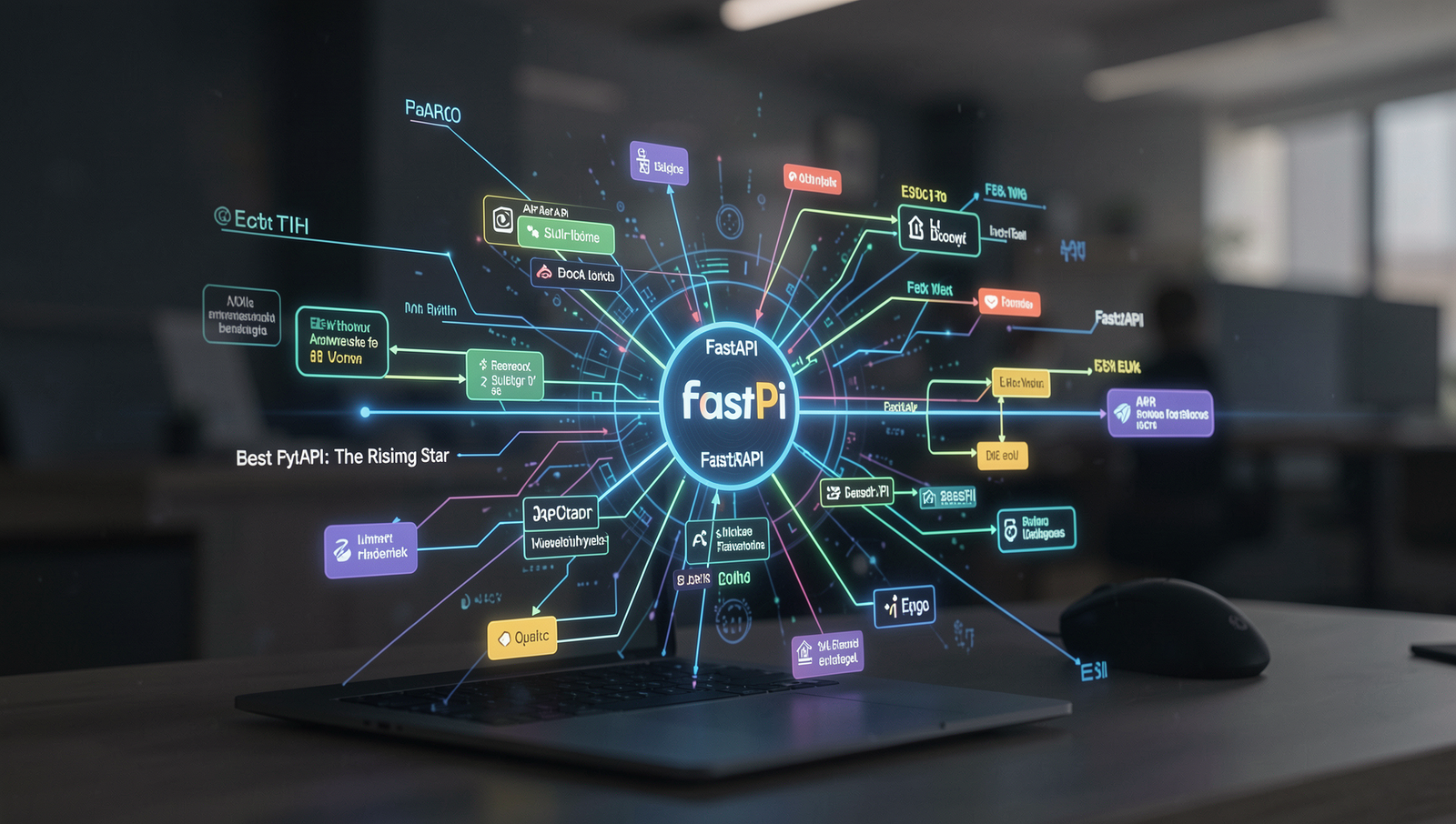
FastAPI has quickly emerged as one of the best Python frameworks for web development in 2026, particularly due to its asynchronous capabilities that allow for high performance. This framework is designed to handle large volumes of requests efficiently, making it ideal for modern web applications that require speed and scalability. With FastAPI, developers can build APIs that are not only fast but also responsive, ensuring a seamless user experience.
One of the standout features of FastAPI is its automatic generation of OpenAPI documentation. This means that as developers create their APIs, they can automatically generate interactive API documentation, which is invaluable for both development and client-side integration. The documentation is user-friendly and allows for easy testing of endpoints directly from the browser, enhancing the overall development workflow.
FastAPI also leverages type hints, which significantly improve code quality and validation. By using Python’s type hints, developers can catch errors early in the development process, leading to more robust applications. This feature not only aids in debugging but also enhances code readability, making it easier for teams to collaborate on projects.
- Asynchronous capabilities for handling multiple requests simultaneously
- Automatic OpenAPI documentation for seamless API interaction
- Type hints for improved code quality and validation
- Increasing popularity in the API development space
As FastAPI continues to grow in popularity, it is becoming a go-to choice for developers looking to create high-performance web applications. Its combination of speed, ease of use, and powerful features makes it a standout framework in the landscape of web development.
Conclusion
In summary, the landscape of web development is continually evolving, and the Best Python Frameworks for Web Development in 2026 are set to play a crucial role in shaping this future. Frameworks like Django and Flask remain popular due to their robust features and flexibility, catering to both beginners and experienced developers. Additionally, newer frameworks such as FastAPI are gaining traction for their performance and ease of use, particularly in building APIs. Each framework offers unique benefits, allowing developers to choose the one that best fits their project requirements.
As we look ahead, it is essential for developers to stay updated on these frameworks and their advancements. Embracing the Best Python Frameworks for Web Development in 2026 will not only enhance productivity but also ensure the creation of scalable and maintainable applications. By investing time in learning these tools, developers can position themselves at the forefront of web development trends, ready to tackle the challenges of tomorrow.
Frequently Asked Questions
What are the top Python frameworks for web development in 2026?
In 2026, the top Python frameworks for web development include Django, FastAPI, Flask, and Pyramid. Each framework offers unique features, catering to different project requirements, from rapid development to high-performance applications, making them popular choices among developers.
Why is Django popular for web development?
Django is popular for web development due to its “batteries-included” philosophy, which provides a comprehensive set of features out of the box. It emphasizes security, scalability, and rapid development, making it ideal for building robust web applications efficiently.
What advantages does FastAPI offer?
FastAPI offers several advantages, including high performance, automatic generation of OpenAPI documentation, and asynchronous support. Its intuitive design allows developers to create APIs quickly while ensuring type safety, making it a preferred choice for modern web applications.
Is Flask suitable for large applications?
Flask can be suitable for large applications, though it is often considered a micro-framework. With proper architecture and extensions, developers can scale Flask applications effectively. Its flexibility allows for customization, making it a viable option for complex projects.