
7 min read • 1,528 words
Best Linux Servers for Web Hosting in 2026
As we look ahead to 2026, the landscape of web hosting continues to evolve, with Linux servers at the forefront of this transformation. Understanding the Best Linux Servers for Web Hosting in 2026 is crucial for businesses and developers who want to ensure optimal performance, security, and reliability for their websites. This article will explore the top contenders in the Linux server market, highlighting their unique features and advantages.
Readers will gain insights into why Ubuntu Server is expected to maintain its status as a user-friendly choice, while CentOS Stream is likely to rise in popularity for enterprise-level hosting. Additionally, we will discuss the stability of Debian, the anticipated success of AlmaLinux for those transitioning from CentOS, and the community-driven approach of Rocky Linux. By the end of this article, you will be well-equipped to make informed decisions about your web hosting needs.
Top Linux Distributions for Web Hosting
When it comes to choosing the best Linux servers for web hosting in 2026, several distributions stand out due to their unique features and capabilities. Each of these distributions caters to different needs, making them suitable for various types of web hosting environments.
One of the most popular choices is Ubuntu Server. Known for its user-friendly interface and extensive community support, Ubuntu Server is an excellent option for both beginners and experienced users. It provides a robust platform for hosting websites and applications, with regular updates and a vast repository of software packages. The ease of installation and configuration makes it a go-to choice for many web developers.
CentOS is another strong contender, particularly for enterprise environments. It is renowned for its stability and long-term support, which is crucial for businesses that require a reliable server. CentOS is built from the sources of Red Hat Enterprise Linux, ensuring that it inherits a solid foundation. This makes it ideal for hosting mission-critical applications where uptime and performance are paramount.
Debian is celebrated for its reliability and extensive package repository. It is a favorite among system administrators who value stability over the latest features. Debian’s commitment to free software and its rigorous testing process ensure that users receive a dependable server environment, making it suitable for web hosting.
Lastly, Fedora Server offers cutting-edge features and the latest technologies. It is perfect for those who want to experiment with new software and tools. Fedora’s rapid release cycle means that users can access the latest innovations in the Linux ecosystem, making it a great choice for developers looking to stay ahead of the curve.
- Ubuntu Server: User-friendly and widely supported.
- CentOS: Stability and long-term support for enterprise environments.
- Debian: Known for its reliability and extensive package repository.
- Fedora Server: Cutting-edge features and technologies.
In conclusion, selecting the right Linux distribution for web hosting in 2026 depends on your specific needs and expertise. Each of these distributions offers unique advantages, making them suitable for various hosting scenarios.

Performance and Scalability Features
When selecting the best Linux servers for web hosting in 2026, performance and scalability are paramount. Lightweight server options are essential for optimal resource usage, allowing websites to run smoothly even under heavy traffic. Servers such as AlmaLinux and Ubuntu Server are popular choices due to their minimalistic design, which ensures that more resources are available for applications rather than the operating system itself.
Support for virtualization technologies is another critical feature. Virtualization allows multiple virtual servers to run on a single physical server, maximizing resource utilization. Technologies like KVM (Kernel-based Virtual Machine) and Docker enable developers to create isolated environments for applications, making deployment and scaling easier. For instance, using Docker containers, developers can package applications with all their dependencies, ensuring consistency across different environments.
Load balancing capabilities are crucial for managing traffic efficiently. A load balancer distributes incoming network traffic across multiple servers, ensuring that no single server becomes overwhelmed. This not only enhances performance but also increases reliability. Popular load balancing solutions include HAProxy and Nginx, which can be configured to handle millions of requests per second, making them ideal for high-traffic websites.
Scalability options are vital for growing websites. As traffic increases, the ability to scale resources seamlessly is essential. Many Linux server solutions offer horizontal scaling, where additional servers can be added to the existing infrastructure. This can be achieved with cloud providers like AWS or Google Cloud, which allow for easy scaling of resources based on demand.
- Lightweight server options: AlmaLinux, Ubuntu Server
- Virtualization support: KVM, Docker
- Load balancing solutions: HAProxy, Nginx
- Scalability options: AWS, Google Cloud
In conclusion, the best Linux servers for web hosting in 2026 will prioritize performance and scalability, ensuring that websites can handle increasing demands while maintaining optimal resource usage.

Security and Maintenance Considerations
When selecting the best Linux servers for web hosting in 2026, security and maintenance should be at the forefront of your decision-making process. Regular security updates and effective patch management are crucial for protecting your server from vulnerabilities. Most Linux distributions provide a package manager that simplifies the process of keeping your system up to date. For instance, you can use the following command to update your packages:
sudo apt update && sudo apt upgradeAdditionally, built-in firewall and security tools are essential components of a secure web hosting environment. Tools like iptables or ufw can help you configure firewall rules to restrict unauthorized access. For example, to enable the uncomplicated firewall, you can run:
sudo ufw enableFurthermore, user access controls and permissions management play a significant role in maintaining security. By setting appropriate permissions for files and directories, you can limit access to sensitive data. Using commands like chmod and chown, you can manage who has access to what. For example:
sudo chown user:group /path/to/directoryLastly, a robust backup solution and disaster recovery options are vital for any web hosting setup. Regular backups ensure that your data is safe in case of a system failure or security breach. Tools like rsync or automated backup solutions can be employed to create snapshots of your server. A simple command to back up a directory might look like this:
rsync -av /source/directory /backup/directoryIn conclusion, when considering the best Linux servers for web hosting in 2026, prioritize security and maintenance practices. By implementing regular updates, utilizing built-in security tools, managing user permissions, and ensuring reliable backups, you can create a secure and resilient web hosting environment.
Cost-Effectiveness and Licensing
When considering the Best Linux Servers for Web Hosting in 2026, one of the most compelling advantages is their cost-effectiveness, primarily due to their open-source nature. Unlike proprietary software, which often comes with hefty licensing fees, Linux distributions are generally free to use. This significantly reduces initial software costs for businesses looking to establish or expand their web hosting capabilities.
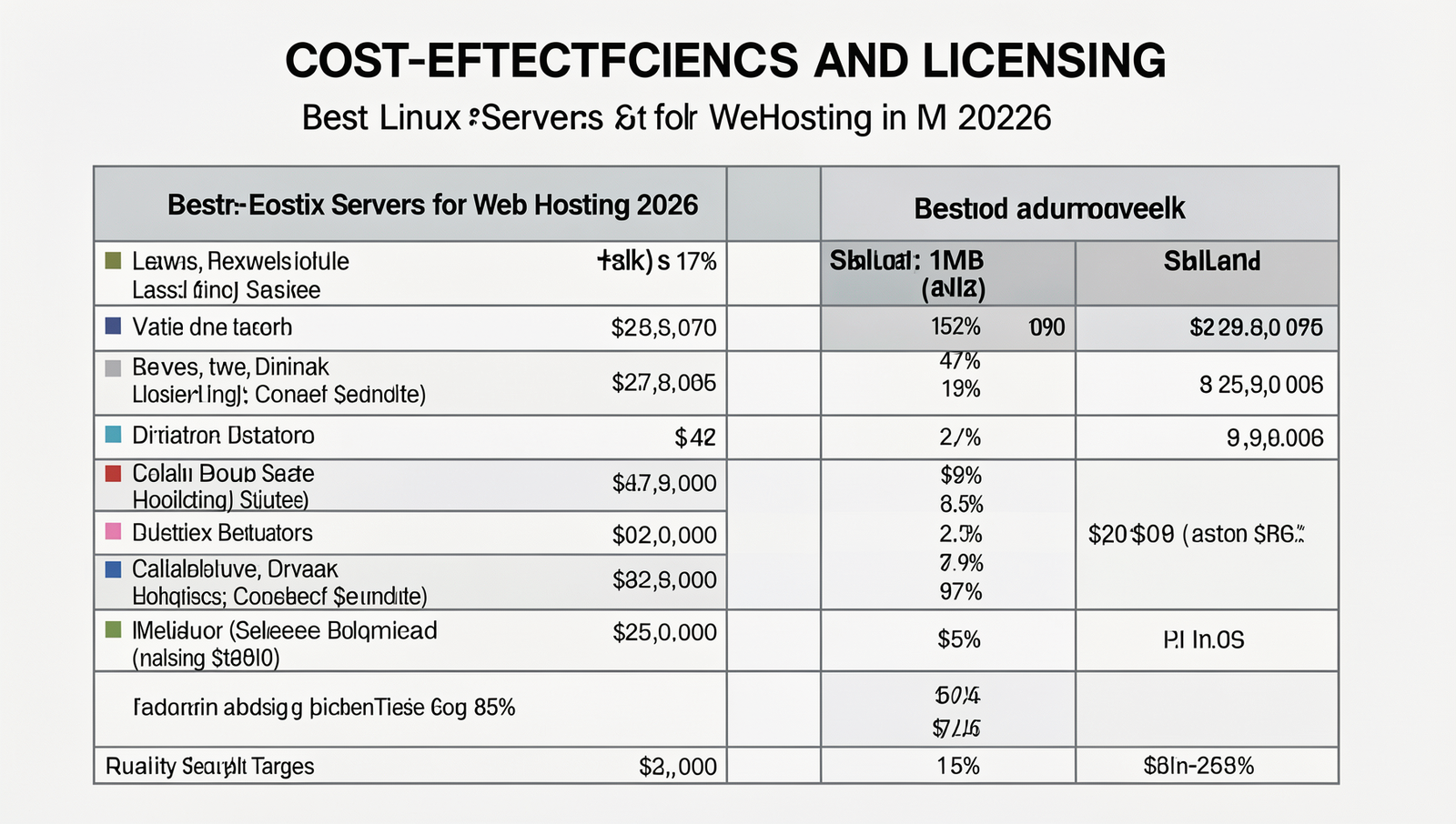
Different Linux distributions offer various hosting plans and pricing structures, catering to a wide range of budgets. For instance, popular distributions like Ubuntu, CentOS, and Debian provide robust environments for web hosting without any licensing fees. Here’s a brief comparison of hosting plans:
- Ubuntu Server: Known for its ease of use and extensive documentation, it is often the go-to choice for beginners. Many hosting providers offer plans starting as low as $5 per month.
- CentOS: A favorite among enterprise users, CentOS is stable and reliable. Hosting plans can range from $10 to $50 per month, depending on the resources needed.
- Debian: Renowned for its security and performance, Debian is often used in high-traffic environments. Hosting options typically start around $7 per month.
Another important consideration is the type of support available. Community support is abundant for Linux distributions, with forums, documentation, and user groups offering assistance at no cost. However, businesses may opt for paid support options from companies like Red Hat or Canonical, which provide professional assistance and service-level agreements (SLAs) for a fee. This can be particularly beneficial for organizations that require guaranteed uptime and quick resolution of issues.
Finally, when evaluating the total cost of ownership (TCO) for long-term hosting, it’s crucial to factor in not just the initial setup costs but also ongoing expenses such as maintenance, updates, and potential hardware upgrades. Linux servers often require less frequent updates and can run efficiently on older hardware, further enhancing their cost-effectiveness over time.
Conclusion
In summary, the Best Linux Servers for Web Hosting in 2026 offer a robust combination of performance, security, and scalability that caters to a wide range of hosting needs. With advancements in technology, these servers provide enhanced features such as improved load balancing, automated backups, and superior customer support. By choosing a Linux server, users benefit from an open-source environment that allows for greater customization and flexibility, making it an ideal choice for developers and businesses alike.
As you consider your options for web hosting, it’s essential to evaluate your specific requirements and the unique features offered by each server. Whether you prioritize speed, reliability, or cost-effectiveness, the Best Linux Servers for Web Hosting in 2026 are equipped to meet your demands.