
7 min read • 1,521 words
What Is Redis and How Does It Work?
In the world of data management, understanding what is Redis is crucial for developers and businesses seeking efficient solutions for their applications. Redis, which stands for Remote Dictionary Server, is an in-memory data structure store that functions as a database, cache, and message broker. Its ability to support various data structures such as strings, hashes, lists, sets, and sorted sets makes it a versatile tool for handling diverse data needs. This flexibility allows developers to optimize performance and enhance user experience significantly.
Redis operates on a key-value store model, enabling rapid data retrieval that is essential for high-performance applications. Moreover, it offers persistence options, allowing data to be saved to disk without sacrificing speed. With features like replication, Redis ensures high availability and scalability, making it a preferred choice for modern applications. In this article, readers will gain insights into how Redis works and why it matters in today’s data-driven landscape.
How Redis Works
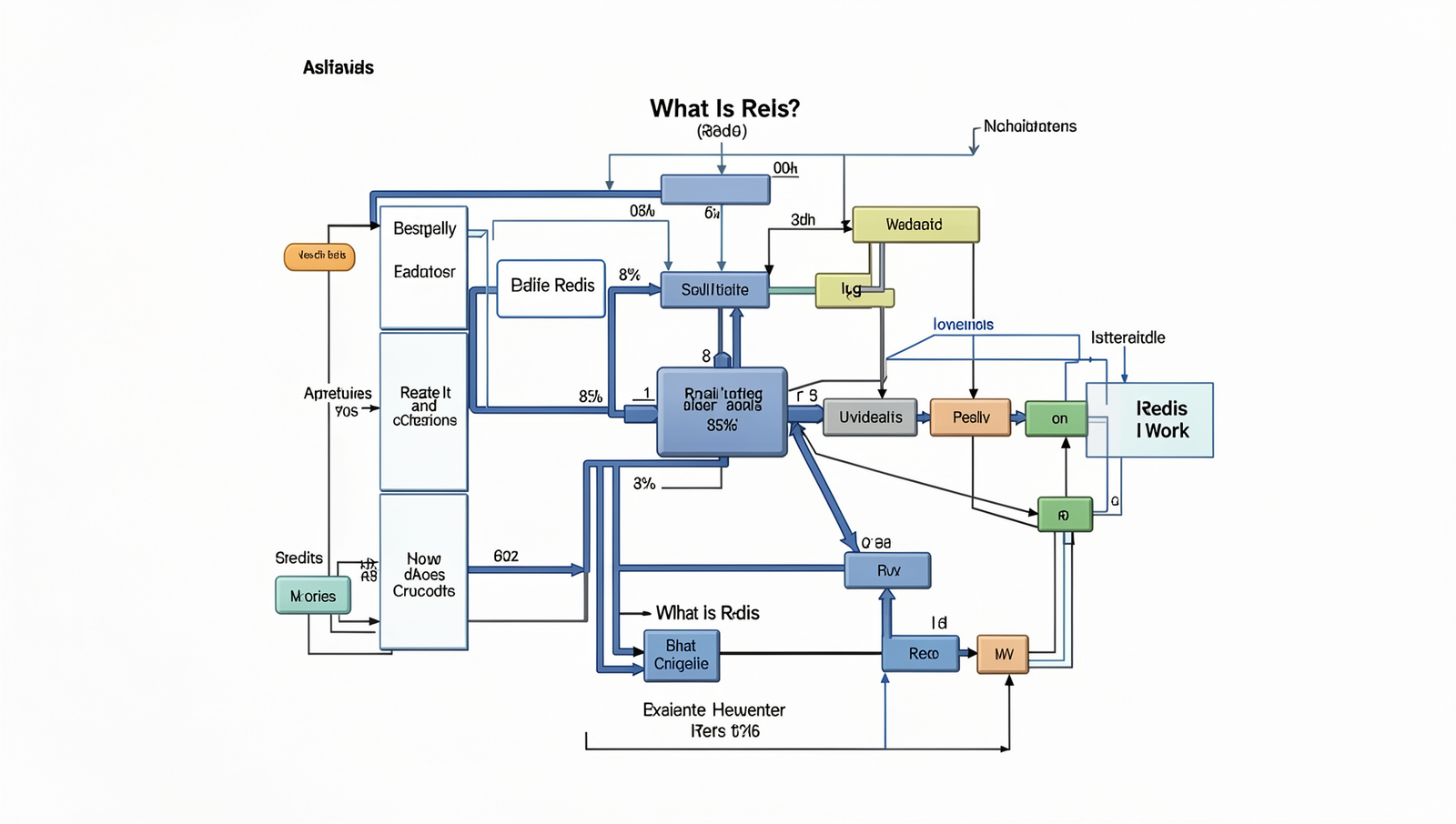
Redis is an in-memory data structure store that offers a variety of data types, making it versatile for different use cases. The primary data structures in Redis include:
- Strings: The simplest data type, which can hold any data, such as text or binary data. A common command to set a string is
SET key value.
- Hashes: These are maps between string field and string values, ideal for representing objects. You can use
HSET hash field valueto set a field in a hash.
- Lists: Ordered collections of strings, which can be manipulated from both ends. You can add items using
LPUSH list valueor
RPUSH list value.
- Sets: Unordered collections of unique strings, useful for membership testing. Use
SADD set valueto add a member to a set.
- Sorted Sets: Similar to sets but with an associated score for each member, allowing for ordered retrieval. You can add a member with a score using
ZADD sortedset score member.
Redis commands are designed for efficiency and speed. For example, you can retrieve a string value using
GET keyor check if a member exists in a set with
SISMEMBER set value.
In terms of data persistence, Redis offers two primary options: RDB snapshots and AOF (Append Only File). RDB snapshots create point-in-time backups of your data at specified intervals, while AOF logs every write operation received by the server, allowing for more granular recovery. You can configure these options based on your application’s needs, balancing performance and durability.
Setting Up Redis
Setting up Redis is a straightforward process that can be accomplished on various platforms, including Windows, macOS, and Linux. Below is a step-by-step guide to installing Redis on these systems.
- Linux: Use the following commands to install Redis on a Debian-based system:
sudo apt update
sudo apt install redis-server
After installation, you can start Redis with:
sudo systemctl start redis- macOS: If you have Homebrew installed, you can install Redis easily:
brew install redisTo start Redis, use:
brew services start redis- Windows: You can download the Redis installer from the official Redis website or use Windows Subsystem for Linux (WSL) to run Redis.
Once Redis is installed, you can optimize its performance by adjusting configuration options in the redis.conf file. Key settings to consider include:
maxmemory: Limits the amount of memory Redis can use.maxmemory-policy: Determines how Redis behaves when it reaches the memory limit.
To connect to Redis from different programming languages, you can use libraries such as:
- Python: Use the
redis-pylibrary. - Node.js: Use the
ioredispackage.
Basic commands to interact with Redis include:
SET key value
GET key
DEL key
These commands allow you to store, retrieve, and delete data in your Redis database effectively.

Best Practices and Use Cases
When utilizing Redis, understanding best practices can significantly enhance performance and resource management. Here are some tips to optimize your Redis deployment:
- Use Appropriate Data Structures: Choose the right data type for your use case. For instance, use hashes for storing objects and sets for unique collections.
- Monitor Memory Usage: Regularly check memory consumption with the
INFO memorycommand to avoid exceeding limits. - Implement Expiration Policies: Set expiration times on keys that are not needed indefinitely to free up memory.
- Use Connection Pooling: Instead of opening new connections for each request, use a connection pool to manage connections efficiently.
However, there are common pitfalls to avoid when using Redis. These include:
- Neglecting Persistence: Relying solely on in-memory storage can lead to data loss. Use Redis persistence options like RDB or AOF.
- Ignoring Security: Always secure your Redis instance by setting strong passwords and restricting access to trusted IPs.
- Overloading with Large Datasets: Avoid storing excessively large datasets in Redis, as this can lead to performance degradation.
Redis finds real-world applications in various domains. It is widely used for caching to reduce database load, session management for web applications, and real-time analytics to process and analyze data streams. As technology evolves, future trends may include enhanced support for multi-model databases and improved integration with machine learning frameworks, further solidifying Redis’s role in modern data management.
Conclusion
In summary, Redis is an advanced key-value store that excels in performance and versatility, making it a popular choice for developers and organizations looking to enhance their data management capabilities. Understanding what is Redis is crucial for leveraging its features, such as in-memory data storage, persistence options, and support for various data structures. These attributes allow Redis to handle high-traffic applications efficiently, providing low-latency access to data and enabling real-time analytics.
As you consider implementing Redis in your projects, it’s essential to evaluate your specific use cases and requirements. The benefits of using Redis include improved application performance, scalability, and the ability to manage complex data types with ease. To get started, explore Redis documentation, experiment with its features, and consider integrating it into your existing architecture. By doing so, you can unlock the full potential of what is Redis and enhance your application’s efficiency and responsiveness.
Real-World Examples
Redis has found its place in various industries due to its versatility and high performance. Many companies leverage Redis for different use cases, illustrating its effectiveness in real-world applications. Here are a few notable examples:
1. Caching Layer: One of the most common uses of Redis is as a caching layer. For instance, online retail giants like Amazon utilize Redis to cache frequently accessed data, such as product details and user sessions. This reduces the load on their primary databases and speeds up response times, leading to a better user experience.
2. Real-Time Analytics: Companies like Uber use Redis for real-time analytics. By storing live data about rides, driver locations, and user requests in Redis, they can quickly process and analyze this information to optimize their services. This allows them to make informed decisions and improve operational efficiency.
3. Leaderboards and Gaming: In the gaming industry, Redis is often used to manage leaderboards. For example, games like Clash of Clans use Redis to store player scores and rankings in real time. The fast read and write capabilities of Redis ensure that players see their rankings updated instantly, enhancing engagement and competition.
4. Session Management: Many web applications use Redis for session management. For instance, social media platforms like Instagram utilize Redis to store user session data. This allows for quick access and retrieval, ensuring that users remain logged in and can access their accounts seamlessly across multiple devices.
5. Pub/Sub Messaging: Redis’s publish/subscribe feature is utilized by companies like Slack for real-time messaging. When a user sends a message, it is published to a channel, and all subscribers receive the message instantly. This functionality is crucial for maintaining real-time communication among users.
These examples demonstrate how Redis can be effectively integrated into various applications, providing speed, efficiency, and scalability. Whether used for caching, real-time analytics, or session management, Redis proves to be a powerful tool in modern software development.
Frequently Asked Questions

What is Redis?
Redis is an open-source, in-memory data structure store that functions as a database, cache, and message broker. It is known for its high performance, flexibility, and support for various data types, making it suitable for real-time applications and analytics.

How does Redis work?
Redis operates by storing data in memory, allowing for extremely fast read and write operations. It uses a key-value store model, where data is accessed via unique keys. This architecture enables efficient data retrieval and manipulation, ideal for high-speed applications.
What data types does Redis support?
Redis supports a variety of data types including strings, hashes, lists, sets, and sorted sets. Each type has unique characteristics and use cases, allowing developers to choose the most appropriate structure for their specific application needs.
Is Redis persistent?
Yes, Redis offers persistence options to ensure data durability. It can save data to disk periodically or log every write operation. This allows users to recover data after a restart, balancing the benefits of in-memory speed with the need for data safety.